
Freeborn County Criminal Docket Searches
Minnesota Court Records Online, or MCRO, is the tool for a Freeborn County criminal court docket search. Case Search lets you look by name, case number, citation number, or attorney bar number. Pick the Criminal category first. Know where the case was filed? Choose Freeborn from the county court locations list. Nothing narrows results like a full case number. Have a citation number or an attorney name handy? That search can also beat a broad name search.
There are quirks worth knowing before you dig in. A defendant-name search may not surface pending criminal, traffic, or petty-misdemeanor matters that lack a conviction. Yet those same cases can still appear through a case number, citation number, or attorney search. Apply a date, category, or status filter only when you are sure of it, because a stale filter can quietly hide the very case you want. And remember that a matching name is just an index line. Check the court location, case number, and filed date before you open the case detail.
- Open MCRO Case Search and choose the best search mode.
- Set the court location to Freeborn County and, where useful, select Criminal.
- Use Find, then compare the court, case number, and filed date in the result list.
- Open the matching case and read its Register of Actions in date order.
- Contact Court Administration for a certified record or an item that is not remotely available.
MCRO Criminal Search Choices
MCRO is a statewide public-access portal, not the certified official record. The Case Search tab is where a criminal Register of Actions hunt begins. Hearing Search fits when you only need a scheduled setting. Document Search, in turn, requires a case number first. Only then can it hunt for an eligible public document. Typing aid comes in two forms. A trailing wildcard works after at least two characters of a name. The Sounds Like option casts a wider net. But MCRO will not pair it with that wildcard.
The official MCRO Case Search lays out these search choices. You will see them on the page before submitting a query.
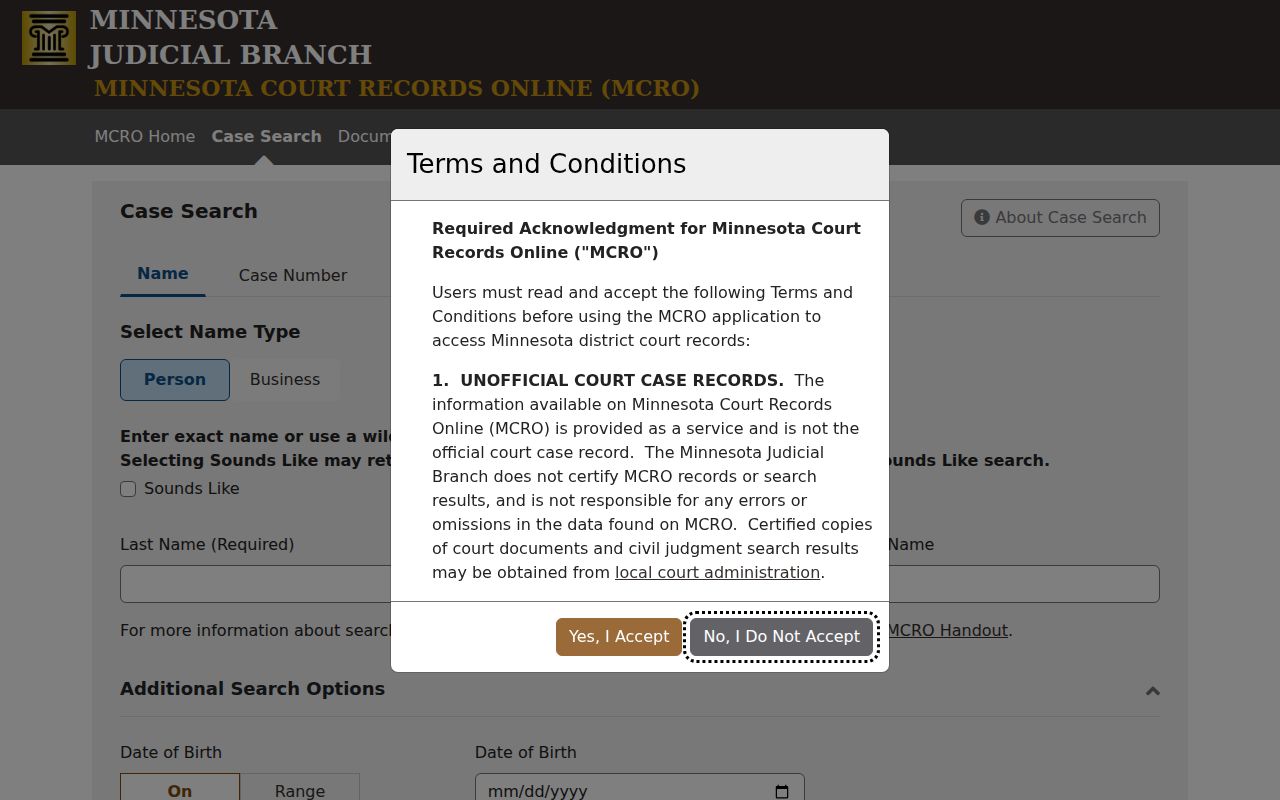
For a Freeborn criminal docket, choose the county and enter a precise identifier. That trims results far better than a pile of guessed filters. Use the portal's own navigation buttons instead of the browser Back button, since session behavior can be touchy. MCRO itself warns that remote results are not the official court record. Need a certified copy, an older file, or a public item outside remote coverage? The local Court Administration office provides the court-held route.
Note: A criminal category describes the portal index and does not state that a charge was proved or resolved.
Criminal Dockets: What They Show
Inside a Freeborn County case detail sits the criminal Register of Actions. It is the event history laid out in order. Everything ties back to the case number. That single number links case identity, parties and attorneys, filing events, hearings, orders, judgments, and status information. Calendar entries and Register entries are cousins, not twins. The calendar says what is scheduled. The Register gives the longer arc, including events already past and any public documents the access rules permit.
| Case number | The precise court identifier used to connect the calendar, filings, and Register of Actions. |
|---|---|
| Case category | The MCRO index grouping. It is not a disposition or a final finding. |
| Hearing setting | Date, time, location, judicial officer, hearing type, and connection information when shown. |
| Filing or order | An event submitted to or issued by the court; remote availability varies by access rule and document date. |
| Disposition | A recorded procedural outcome that must be read with the actual Register sequence and public orders. |
A criminal calendar leans on familiar labels: arraignment, initial appearance, pre-trial, plea hearing, review hearing, jury trial, court trial, or probation-violation hearing. Each one tells you what was scheduled. It never tells you what actually happened at that setting.
Freeborn Criminal Docket Terms
Short event labels work as signposts, nothing more. Context does the rest. Reading them in chronological order keeps a mere filing or a scheduled event from being mistaken for a completed result, and both the court and the portal may shift labels as a case moves along.
- Filed
- An opening charge or other item was entered into the case record.
- Arraignment
- A scheduled criminal court proceeding; the Register supplies the event history around it.
- Pre-trial
- A setting before trial, not a result on the charge.
- Continued
- A matter was moved or carried forward; check later Register entries for the next event.
- Disposition
- The recorded outcome or procedural resolution, which should be read with the supporting order or judgment when public.
- Closed
- A displayed case-state indicator that still requires the Register for its procedural context.
Minnesota's expungement statute spells out a petition process separate from ordinary docket searching. A restricted record is not a normal remote result, so treat any expungement issue as its own track rather than a search filter.
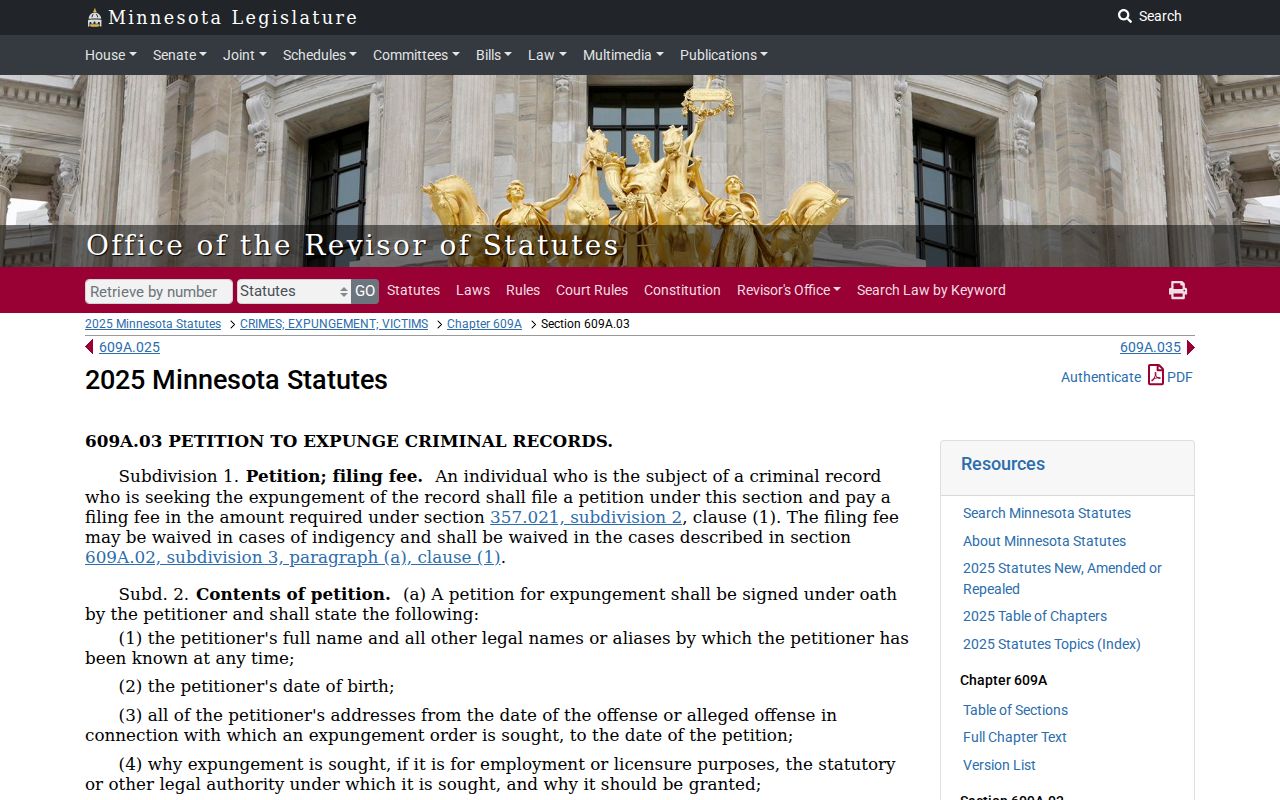
The statute's own text draws the line between a public Register search and the legal process that can restrict access to a court record. That distinction matters every time a docket result seems thinner than expected.
Criminal Case Stages on the Docket
A Freeborn County criminal case often travels a recognizable road. It starts with an opening or charging event. From there it moves to a first appearance or arraignment, then runs through counsel entries, motions, pre-trial activity, a plea or trial setting, a disposition, and sentencing or later review events when they apply. The exact route depends on the case. A public event list may add orders, probation-violation proceedings, warrants, satisfaction, or closure entries.
Docket flow: Filing › Arraignment › Pretrial › Plea or Trial › Disposition › Sentencing
Always confirm whether an entry is scheduled or completed. A daily calendar can shift after posting. A later Register entry may reveal that a hearing was continued or resolved, and the case number is the sound way to cross-check the two sources.
Freeborn Calendar and Register
The Freeborn Daily Court Calendar is a PDF schedule covering the next day. It posts at 7:00 p.m. It gets hourly updates starting at 7:00 a.m. The courthouse's posted version counts as the most current one. Each row can carry location, date, time, judicial officer, hearing type, connection type, and case number. Still, it is no substitute for the criminal case file.
| Source | Best use | Important limit |
|---|---|---|
| Daily court calendar | Confirm a near-term scheduled setting. | It can change and omits confidential or non-remotely accessible matters. |
| MCRO Register of Actions | Read the chronological public event history. | Remote documents and case types have access limits. |
| Court Administration | Ask about court-held access, copies, or a specific record route. | Confidential and sealed material remains restricted. |
If a notice and the online calendar disagree, verify the notice or call Court Administration. A missing calendar row never proves a hearing was canceled.
Freeborn County Criminal Docket Courts
Freeborn County District Court handles every criminal charge filed in the county. Minnesota runs one unified District Court trial system. That means you will not find a separate municipal criminal docket. Nor is there a stand-alone Freeborn clerk portal. One local filing stays a Freeborn County District Court case. MCRO serves as the statewide remote route to whatever public information is eligible.
The court sits in the Third Judicial District. Regional administration and district programs add services, not a second docket. County filtering in MCRO still points to the same Freeborn record. Appellate and federal cases live in separate court layers entirely.
Third District Veterans Treatment Court
The district's treatment-court information lists a Veterans Treatment Court serving all eleven counties. It includes a Freeborn or Albert Lea program contact. Treat it as a program, not a database. It is a regional problem-solving court. It does not replace the Freeborn District Court record when you need a case-specific Register search.
Why does it matter for a court calendar? It shows how one local criminal case can plug into a districtwide service. The access rules for individual records stay the same. For a particular hearing or file, rely on the notice, the Register of Actions, and Court Administration. The official treatment-court page lays out the district's program details.
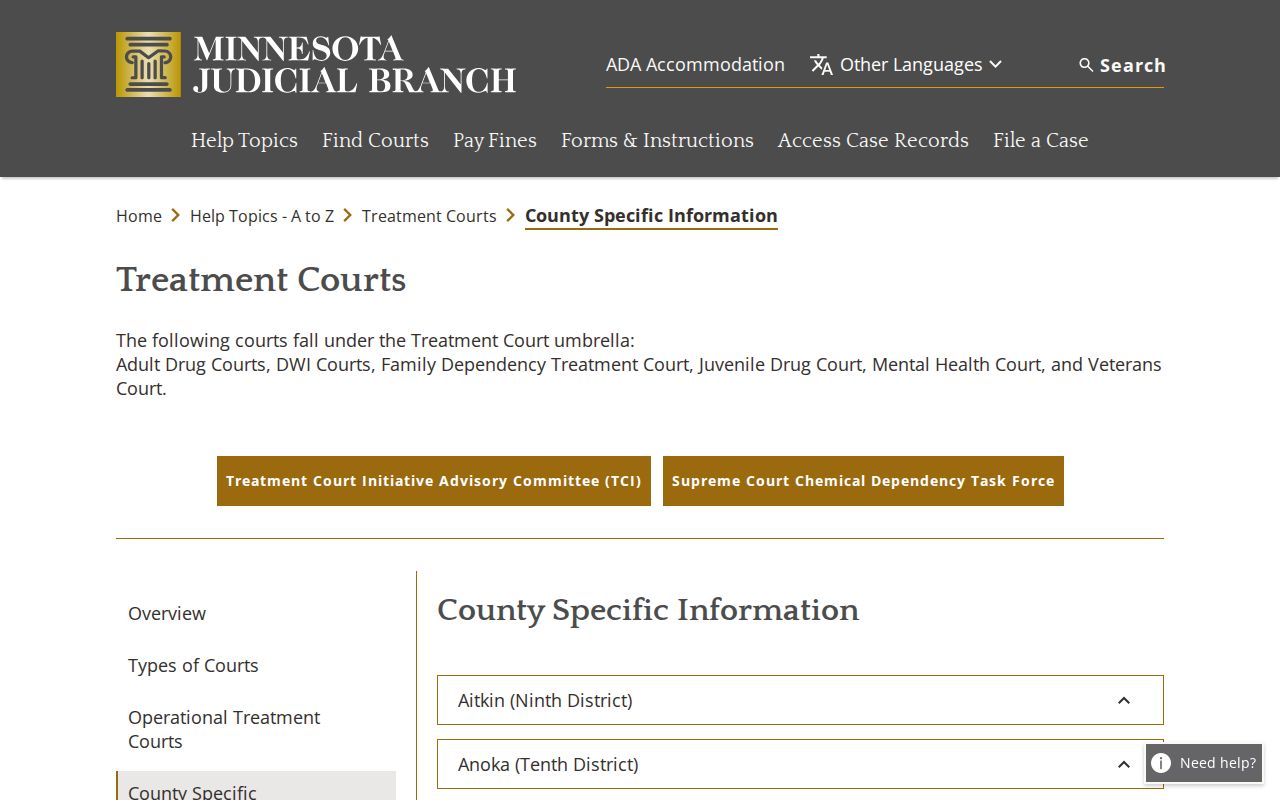
The district program runs outside the Freeborn County criminal docket itself. Treat it as a track, not a place where case events are recorded.
Access Rules for Criminal Dockets
Minnesota starts from openness. The Minnesota Rules of Public Access presume court records are public, though law, court rule, or a judge's order can close them. Rule 8 spells out the details. It covers inspection, copying, remote access, and the Register of Actions. The categories barred from remote viewing are listed too. Want the fullest view of a Freeborn County criminal docket? A courthouse public terminal beats remote MCRO. It opens more of the public file without exposing confidential material.
Key access rules:
Minnesota Rules of Public Access, Rule 2 presumes access during regular business hours unless another authority limits it.
Rule 8 addresses the Register of Actions, remote access, sensitive identifiers, and access at the record custodian.
General Rule of Practice 11 restricts public filing of sensitive identifiers.
Minn. Stat. §260B.163 generally closes juvenile hearings, subject to statutory exceptions.
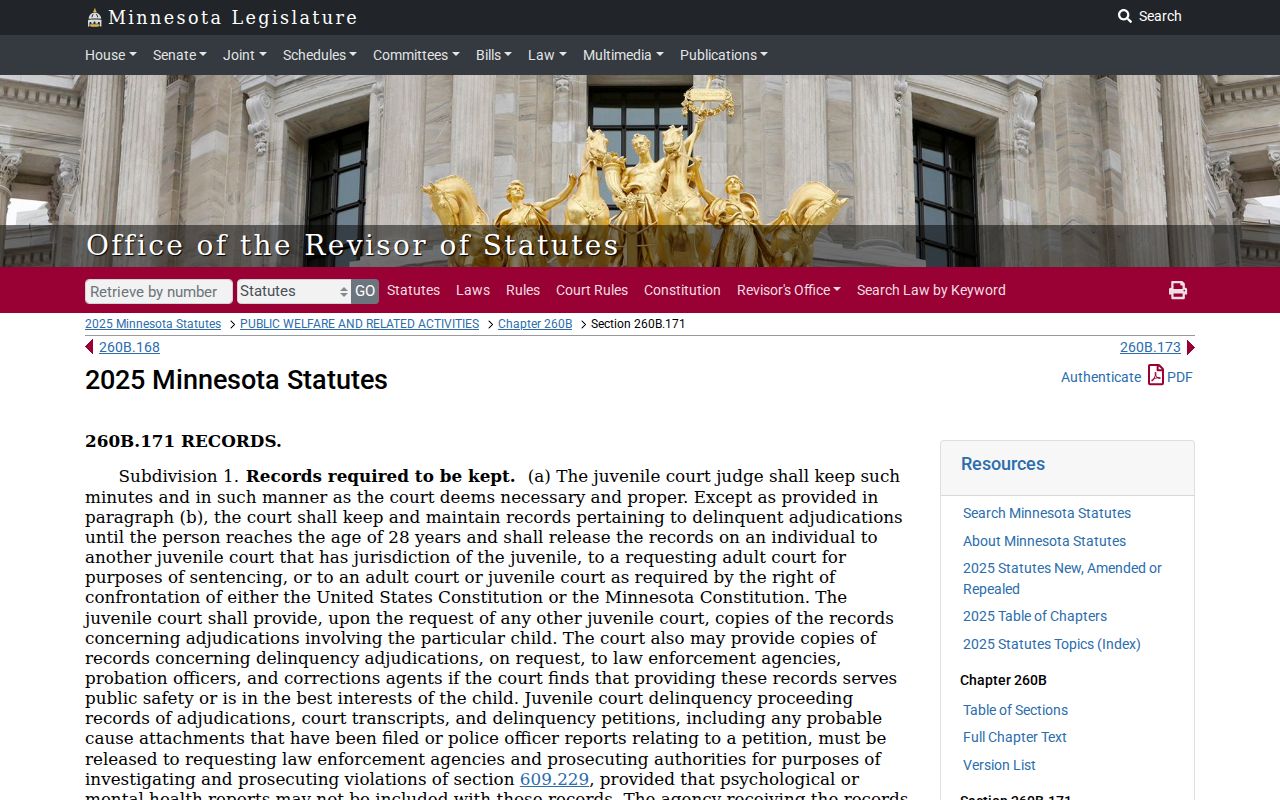
Juvenile cases sit under tighter limits. Minn. Stat. §260B.171 adds extra restrictions on juvenile proceedings. The statute covers their records as well. Sealed, confidential, or expunged matters stay closed to a remote search too. Those requests run through the applicable access form and the judicial process.
Freeborn Criminal Records Beyond MCRO
MCRO's own accessible-records material draws the line. Most online documents cover filings from July 1, 2015, onward. Older filings have only limited coverage. So a missing remote document proves nothing about whether a record exists. Write down the exact case number first. Then call Freeborn Court Administration at (507) 668-6014. Ask about the courthouse public terminal, a locally held file, or how to request copies. The Government Center sits at 411 South Broadway in Albert Lea. The MCRO accessible-case-types handout lays out where remote coverage stops.
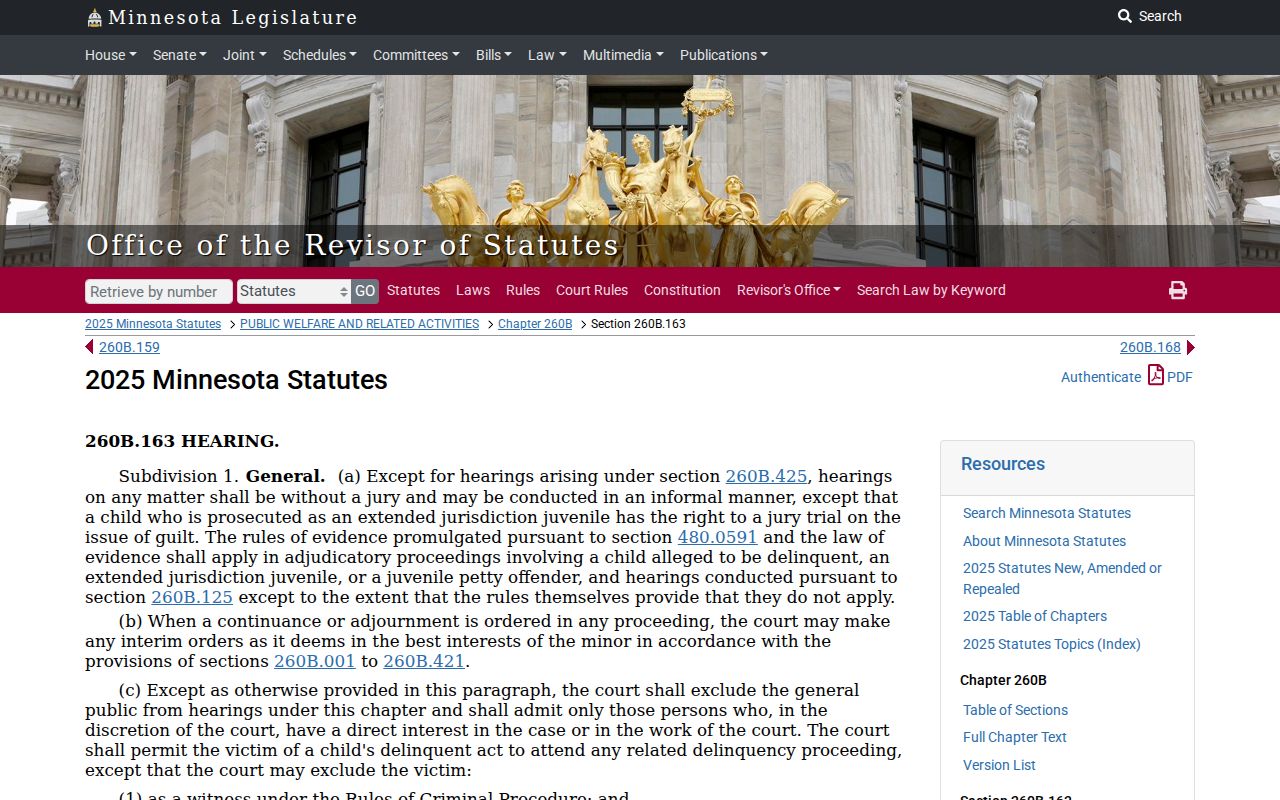
Courthouse access never beats a statutory restriction. That point matters for juvenile matters in Freeborn County.
The juvenile-records statute sets out additional limits on who may see juvenile records.
When a Freeborn County case record sits outside remote coverage, Court Administration can point you to the right next step. Treat a blank portal result as just that, not as word of a case outcome.
Note: Certified records come from the local court, not from a copy of a remote search result.